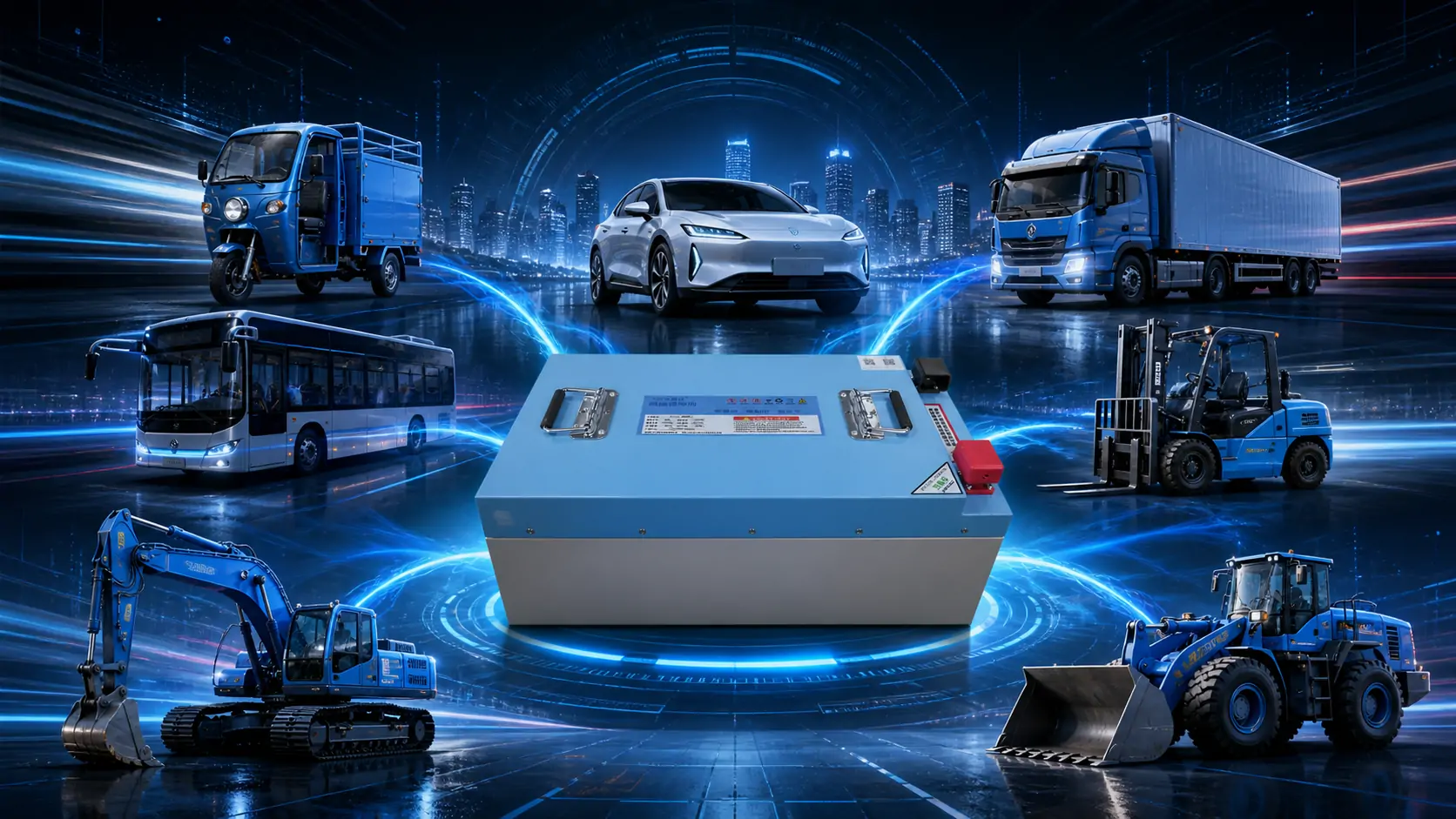
Selecting the right traction battery is critical for electric tricycles, light EVs, and industrial vehicles. Among the available chemistries, LiFePO4 (lithium iron phosphate) has become a preferred choice due to its safety, cycle life, and stable voltage output. This guide focuses on 60V and 72V LiFePO4 traction battery selection, providing practical specifications, safety checks, and sourcing guidance for OEM and wholesale battery projects.
Understanding 60V and 72V LiFePO4 Traction Batteries
Traction batteries are designed to deliver sustained power for propulsion. The 60V and 72V nominal voltages are common in electric tricycles, golf carts, and small utility vehicles. LiFePO4 cells typically have a nominal voltage of 3.2V per cell. A 60V battery uses 19 cells in series (19S), while a 72V battery uses 24 cells in series (24S). The actual voltage range during operation is approximately 54V to 73V for a 60V system and 65V to 87V for a 72V system, depending on state of charge and load.
Key Specifications to Evaluate
Capacity and Range
Capacity is measured in ampere-hours (Ah) and determines how long the battery can power the vehicle. For electric tricycles, common capacities range from 20Ah to 100Ah. Higher capacity increases range but also weight and cost. Estimate required capacity based on daily mileage, motor power, and expected depth of discharge (DoD). LiFePO4 batteries can typically handle 80% DoD without significant cycle life reduction.
Continuous and Peak Discharge Current
The battery must support the motor’s continuous current draw and occasional peak demands. For example, a 1kW motor at 60V draws about 17A continuously, but acceleration may require 30A or more. Ensure the battery’s continuous discharge rating (C-rate) and peak rating (usually 2-3C for a few seconds) match the motor controller specifications.
BMS Sizing and Protection
The Battery Management System (BMS) is essential for LiFePO4 packs. It monitors cell voltages, balances cells, and protects against overcharge, over-discharge, overcurrent, and short circuits. For 60V and 72V systems, select a BMS rated for the correct number of series cells (19S or 24S) and a continuous current rating at least 20% higher than the maximum expected load. Some BMS units also include temperature sensors and communication interfaces for advanced monitoring.
Charger Matching and Safety
Use a charger specifically designed for LiFePO4 chemistry. The charging voltage for a 60V pack is typically around 73V (3.85V per cell), and for a 72V pack around 87V. Chargers with CC/CV (constant current/constant voltage) profiles are standard. Verify that the charger’s output voltage and current are compatible with the battery’s specifications. Overvoltage charging can damage cells and create safety risks.
Procurement Considerations for Wholesale Buyers
When sourcing 60V or 72V LiFePO4 traction batteries for OEM or distribution, consider the following:
- Cell quality: Request cell datasheets and cycle life test reports from the manufacturer.
- Certification: Check for relevant safety certifications such as UN38.3 for transport and IEC 62619 for industrial applications.
- Customization: Many suppliers offer custom connectors, mounting brackets, and communication protocols (CAN, RS485) for integration.
- Lead time and MOQ: Confirm minimum order quantities and typical production lead times.
- Warranty terms: Understand the warranty coverage and return policies before placing bulk orders.
Frequently Asked Questions
What is the difference between 60V and 72V LiFePO4 traction batteries?
The primary difference is the number of cells in series: 60V uses 19 cells, while 72V uses 24 cells. This affects the voltage range, motor compatibility, and overall system design. 72V systems generally offer higher power output and efficiency for larger vehicles, but require compatible motor controllers and chargers.
How do I choose the right capacity for my electric tricycle?
Calculate your daily energy consumption by multiplying motor power (kW) by operating hours. Then divide by the battery voltage and add a safety margin of 20-30%. For example, a 1kW motor running 4 hours needs about 4kWh. At 60V, that is roughly 67Ah. Consider terrain, load, and desired reserve capacity.
Can I replace a lead-acid battery with a LiFePO4 battery of the same voltage?
Yes, but you must verify that the charger and motor controller are compatible with LiFePO4 voltage ranges. Lead-acid chargers often have different charging profiles and may overcharge LiFePO4 cells. Also, LiFePO4 batteries are lighter and have a flatter discharge curve, which may affect state-of-charge indicators.
What BMS specifications are important for 60V and 72V LiFePO4 packs?
The BMS must match the series cell count (19S or 24S) and have a continuous current rating sufficient for your motor. Look for features like cell balancing (passive or active), overcurrent protection, and temperature monitoring. For larger packs, a BMS with CAN or RS485 communication can integrate with vehicle systems.
Leave a Reply