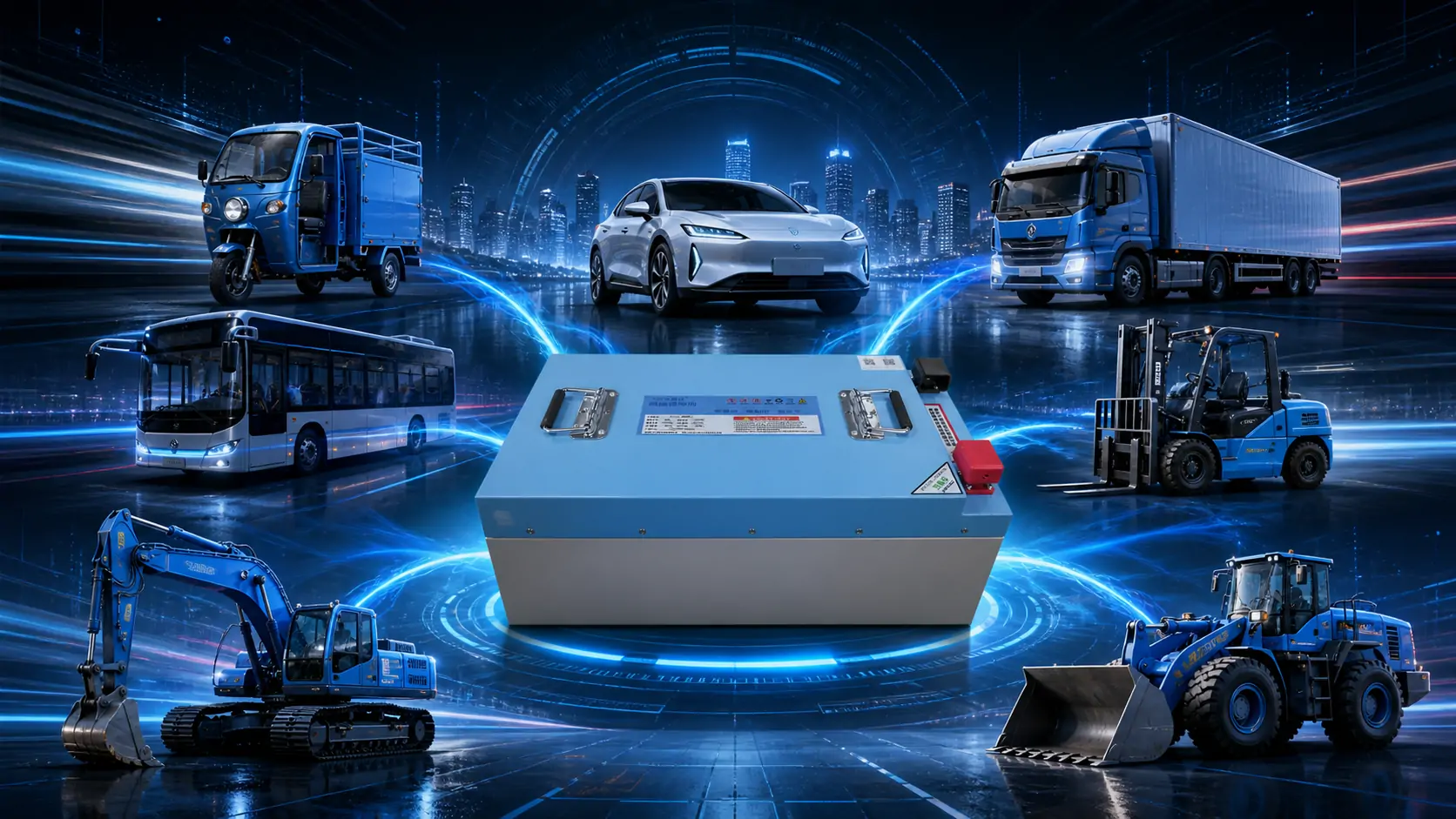
When building or upgrading a solar inverter system, the choice of energy storage directly affects performance, safety, and long-term cost. Lithium iron phosphate (LiFePO4) batteries have become the preferred solution for residential, commercial, and off-grid solar installations due to their thermal stability, long cycle life, and compatibility with modern inverters. This guide provides practical specifications, safety checks, charger matching advice, and sourcing guidance for OEM and wholesale battery projects.
Why LiFePO4 for Solar Inverters
LiFePO4 chemistry offers several advantages over traditional lead-acid or other lithium-ion variants. The cathode material is inherently stable, reducing the risk of thermal runaway. Cycle life typically exceeds 4,000 cycles at 80% depth of discharge, compared to 500–1,000 cycles for lead-acid. Energy density is higher, allowing compact installations. Additionally, LiFePO4 batteries maintain consistent voltage output during discharge, which improves inverter efficiency.
Key Specifications to Evaluate
Voltage and Capacity
Most solar inverters operate at nominal system voltages of 12V, 24V, or 48V. LiFePO4 cells have a nominal voltage of 3.2V per cell, so a 48V battery typically uses 16 cells in series (51.2V nominal). Capacity is measured in ampere-hours (Ah) and kilowatt-hours (kWh). For a typical home, a 5–15 kWh battery bank is common. Always confirm the inverter’s voltage range and maximum charge/discharge current.
Continuous and Peak Discharge Current
The battery must supply enough current for the inverter’s rated output. For example, a 5 kW inverter at 48V requires about 104 A continuous. Check the battery datasheet for continuous discharge current (C-rate) and peak current for surge loads like motor starting. A 1C continuous rating means a 100 Ah battery can deliver 100 A safely.
BMS Communication Protocols
Modern inverters communicate with the battery management system (BMS) to optimize charging and protect against over-discharge. Common protocols include CAN bus, RS485, and RS232. Some inverters use proprietary protocols like Pylontech or BYD. Verify that the battery BMS supports the same protocol as your inverter, or use a communication adapter. Without proper communication, the inverter may not charge correctly or may trigger error codes.
Safety and Certification Considerations
LiFePO4 batteries are safer than many alternatives, but proper design still matters. Look for batteries with built-in BMS that provides over-voltage, under-voltage, over-current, short-circuit, and temperature protection. Cells should be grade A from reputable manufacturers. While we do not list specific certifications here, buyers should request test reports for UN38.3 (transportation safety), IEC 62619 (industrial battery safety), and UL 1973 (stationary storage) depending on target markets.
Charger and Inverter Matching
LiFePO4 batteries require a specific charge profile: constant current (CC) until the absorption voltage (typically 3.45–3.65V per cell), then constant voltage (CV) until current drops to a termination level. Many inverters have a “LiFePO4” or “User-Defined” charging mode. If not, set the bulk/absorption voltage to 56.0–57.6V for a 48V bank and float voltage to 54.0–55.2V. Avoid equalization charging, which can damage LiFePO4 cells.
Price Factors and Procurement Checks
Pricing for LiFePO4 batteries varies by capacity, cell quality, BMS features, and enclosure type. Factors include:
- Cell grade: Grade A cells from major manufacturers cost more but offer better consistency and cycle life.
- BMS complexity: Smart BMS with communication and Bluetooth monitoring adds cost.
- Enclosure: Wall-mounted or rack-mount designs are more expensive than basic box enclosures.
- Quantity: Wholesale orders typically receive volume discounts.
When sourcing, request a specification sheet, BMS communication protocol details, and dimensional drawings. Ask about lead time, minimum order quantity, and packaging for sea freight. Verify that the battery’s discharge current matches your inverter’s surge rating.
Frequently Asked Questions
Can I use a LiFePO4 battery with any solar inverter?
Most modern solar inverters support LiFePO4 batteries, but you must check the inverter’s voltage range and charge profile. Some older inverters designed for lead-acid may not have a suitable LiFePO4 charging algorithm. In such cases, a programmable charge controller or a battery with a compatible BMS can bridge the gap.
What is the typical lifespan of a LiFePO4 solar battery?
LiFePO4 batteries typically last 4,000 to 6,000 cycles at 80% depth of discharge, which translates to 10–15 years for daily cycling. Actual lifespan depends on operating temperature, charge/discharge rates, and BMS quality. Keeping the battery between 20°C and 30°C and avoiding full discharges extends life.
Do I need a special BMS for solar inverter applications?
Yes. The BMS must support the inverter’s communication protocol (CAN, RS485, etc.) and handle the high continuous currents typical of solar systems. A standard BMS for small electronics may not be rated for the current or voltage of a solar battery bank. Always confirm the BMS specifications with the supplier.
How do I calculate the battery capacity I need for my solar system?
First, determine your daily energy consumption in kWh. Then divide by the inverter efficiency (typically 0.85–0.95) and multiply by the desired days of autonomy (e.g., 1–3 days for grid-tied, 3–5 days for off-grid). Finally, divide by the system voltage to get ampere-hours. For example, 10 kWh daily consumption, 48V system, 2 days autonomy: (10,000 Wh / 48V) × 2 = 416 Ah. Add 20% margin for safety.
Leave a Reply