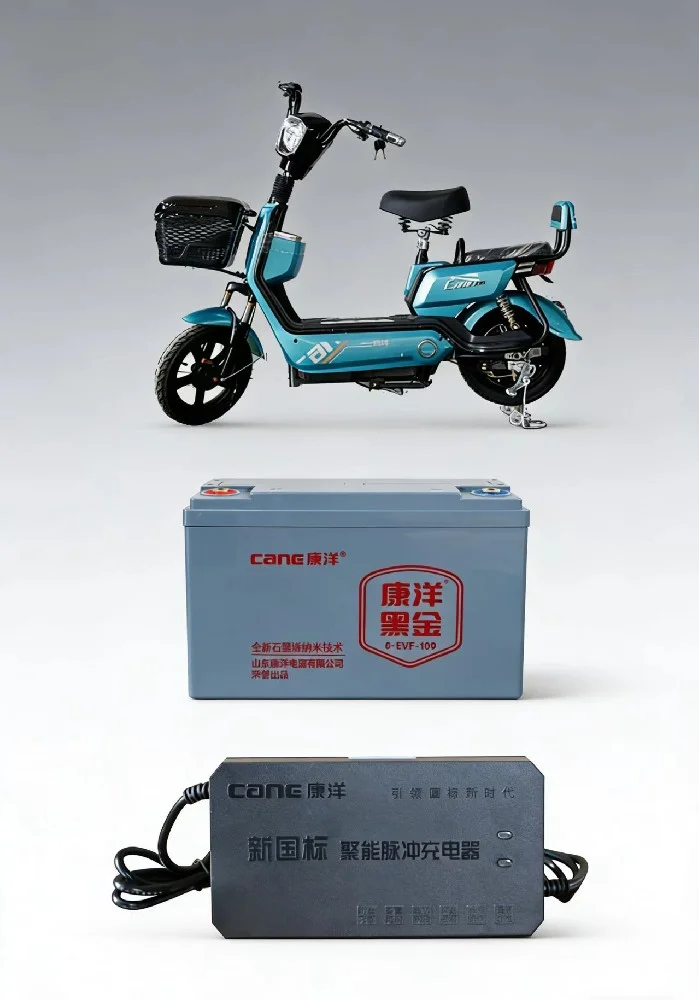
Many electric bike riders notice that in winter, the same bike and the same route that could go far in summer now drains power quickly, sometimes running out halfway. Many people’s first reaction is ‘the battery is broken’ and they rush to buy a new one, but in most cases, the battery is not damaged. In fact, the reduced range of electric bikes in winter is mainly caused by a combination of factors including battery characteristics, ambient temperature, and usage habits. As a professional lead-acid battery manufacturer, we will explain the real reasons why electric bike range decreases in winter and how to easily solve it.
I. Battery Characteristics: Chemical ‘Hibernation’ in Low Temperatures
The performance of the lead-acid batteries we commonly use is closely related to temperature and is very sensitive to it. This is the core reason for poor range in winter.
- At around 25°C, the battery has the best activity and can fully deliver its capacity.
- When the temperature drops to 0°C–10°C, the internal chemical reaction slows down, and the actual usable capacity decreases significantly.
- The lower the temperature, the more pronounced this ‘shrinkage’ becomes.
Simply put: the battery is not broken; it just ‘cannot perform’ in the cold. It is not a quality issue.
II. Ambient Temperature: The ‘Invisible Killer’ of Range
In addition to the battery’s own characteristics, ambient temperature also significantly affects the range of electric bikes. In winter, roads may have snow or ice, requiring more power to overcome the resistance of slippery surfaces. At the same time, current discharges faster in low temperatures, leading to more noticeable power consumption. Moreover, when riding, we frequently brake and accelerate for safety, which increases energy consumption.
III. These Habits Make Range Even Worse
- Charging directly outdoors in low temperatures. Charging an electric bike outside in winter slows down charging and may not fully charge the battery, resulting in shorter range.
- Not riding for a long time and not recharging. Batteries self-discharge when idle, and low temperatures can damage a depleted battery more easily.
IV. Simple Tips to Get a Few More Kilometers in Winter
- Charge in a well-ventilated, separate shed or garage, avoiding cold environments like snow or ice.
- After the charger indicates full, let it charge for an additional 1–2 hours before unplugging (lead-acid batteries benefit from a full charge).
- When riding, accelerate slowly, brake less abruptly, and carry less weight.
- If not riding for a long time, recharge every 7–10 days.
- Avoid exposing the battery to wind, snow, or freezing conditions for extended periods.
V. When Is the Battery Really Broken?
If you have followed the above tips but still encounter the following situations, then consider replacing the battery:
- The charger indicator turns green very quickly, but the battery drains as soon as you ride.
- The battery is visibly swollen, hot, or leaking.
- The battery has been used for more than 2–3 years and has severely degraded.
Finally, remember that reduced range in winter is a normal characteristic of lead-acid batteries. There is no need to replace the battery as soon as it gets cold. Proper charging and daily maintenance can both improve range and extend battery life.
Cane Energy focuses on the R&D and production of lead-acid batteries, providing durable, reliable, and high-quality batteries suitable for electric bikes. We will continue to share practical battery maintenance and usage tips to help you spend less and use with more confidence.
Leave a Reply