Tag: Cane Energy

  • Cane Energy: How a Small-Town Battery Maker Powers the Future with Innovation

    Cane Energy: How a Small-Town Battery Maker Powers the Future with Innovation

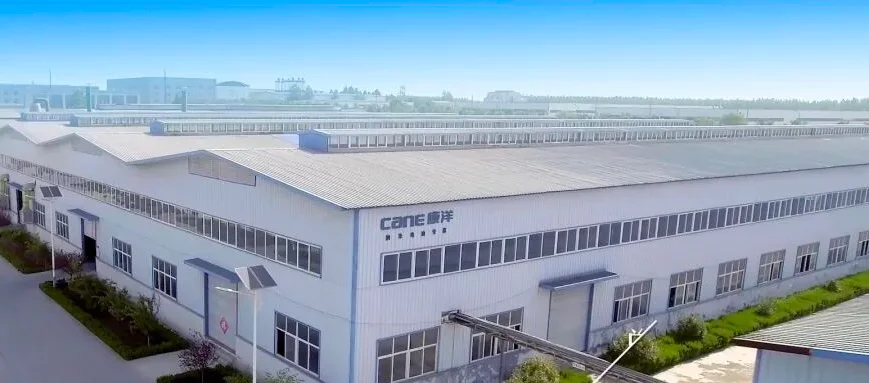
    In Gaozee Street, Wulian County, Rizhao, a company named Cane Energy is writing a vivid chapter in the transformation and upgrading of traditional manufacturing with high-performance batteries. From lead-acid batteries to lead-lithium batteries, from 8-hour charging to 2-hour fast charging, from stable discharge in extreme environments of -30°C to 96% efficient energy conversion… this small-town enterprise has taken a solid path driven by technological innovation over two decades of focus.

    Biting the “Hard Bone”: Core Technology Breakthroughs

    “What we want to do is not just produce batteries, but redefine batteries.” These words from Chief Engineer Xia Bode reveal Cane Energy’s R&Doriginal commitment. On an autumn night in 2021, the R&D center was brightly lit as the team worked continuously for 20 hours, trying 12 material formulas, and finally broke through the “dual-conductive crystal lithium material fast-charging technology,” achieving a 100% leap in charging efficiency. Today, the company has obtained 32 patents, overcome more than 50 new technologies, and built a product system covering 12 categories and over 400 specifications. This technological “moat” is the foundation of Cane Energy’s steady development.

    Building “Smart Lines”: Green Manufacturing for Quality and Efficiency

    In 2023, the company invested over 30 million yuan to upgrade its continuous casting and rolling production line. Since its launch in 2024, plate production capacity has doubled, labor usage has been reduced by 60%, and energy consumption has dropped by 30%. More notably, the lead melting temperature has been lowered from above 500°C to 327°C–350°C, lead utilization has increased to over 97%, achieving “zero lead fume emissions.” This fully automated production line represents not just a capacity increase but a transformation in development mode—a profound shift toward green, intelligent, and sustainable practices.

    Winning “User Hearts”: Market Recognition Fuels Innovation

    With a 19% increase in battery capacity and a 34% extension in lighting duration, coupled with a service system of “one-year replacement + 18-month warranty,” Cane Energy has become the top choice for industries such as food delivery and logistics. With an annual output exceeding 1.2 million units, sales revenue reaching 220 million yuan, and orders growing 30% year-on-year—market recognition injects strong momentum into the company’s continuous innovation. From a small town to the whole country, Cane Energy has established itself as a “hidden champion” in the battery industry through quality and service.

    From “manufacturing” to “smart manufacturing,” from “following” to “leading,” Cane Energy’s growth trajectory confirms the strong vitality of “specialized and new” enterprises. It has no geographical advantages or resource dividends, but with the belief of “making batteries to the extreme,” it has deeply cultivated its niche. In Rizhao, companies like Cane Energy, which take innovation as a boat and quality as an oar, are emerging. They may not be in the spotlight, but they are solidly driving industrial upgrading and urban development. The future competition is about technology, quality, and continuous innovation—Cane Energy’s path is a “must-take road” aligned with high-quality development logic.

    This article is a reprint for corporate publicity only. Copyright belongs to the original media. If copyright issues are involved, please contact us for timely handling.

    Source: Rizhao News Network WeChat Official Account | October 21, 2025 | Reporter: Li Shan | Editor: Liu Fan | Reviewer/Coordinator: Xu Lei
  • Cane Energy Files Patent for Lightweight High-Energy Power Battery Electrolyte

    Cane Energy Files Patent for Lightweight High-Energy Power Battery Electrolyte

    According to information from the China National Intellectual Property Administration, Shandong Cane Energy Power Technology Co., Ltd. has filed a patent titled “A Lightweight High-Energy Power Battery Electrolyte,” with application number CN202511122743.0 and a publication date of November 2025.

    Patent Abstract

    The present invention relates to the technical field of battery electrolytes, specifically to a lightweight high-energy power battery electrolyte. It includes perfluorocyclobutane-polytetrahydrofuran polyrotaxane gel, PbS@MoS2 core-shell quantum dot interface regulation, and a LiFSI/Mg(TFSI)2 dual-salt system, achieving high wettability. This increases the overall mass energy density of the battery to 398 Wh/kg, which is 53% higher than that of LFP batteries of the same volume.

    The FDAC solvent has a freezing point as low as -68°C. Combined with the reduced desolvation barrier from PbS@MoS2 core-shell quantum dots, the 5C discharge capacity retention rate at -50°C reaches 83%. The gradient SEI induced by the dual-salt system exhibits high compressive stress characteristics. Together with the topological restriction of dendrite growth by PbS@MoS2 core-shell quantum dots, it successfully passes 50 MPa extrusion and nail penetration tests.

    Background Technology

    In typical application scenarios of lightweight high-energy battery electrolytes (such as drones and electric vehicles), existing formula designs are mostly based on the need for high energy density, lightweight, and safety improvements, but still have many limitations. Shortcomings of existing technologies include: conventional carbonate-based electrolytes have a density as high as 1.6-2.0 g/cm³, causing the battery system mass to account for over 35%, severely restricting lightweight requirements; at -40°C, electrolyte viscosity surges (>300 cP), Li⁺ transference number <0.3, and capacity drops sharply to below 15% of the initial value; under fast charging (≥5C), lithium deposition is uneven (surface roughness Ra>300 nm), easily causing short circuits and dendrite risks; additionally, the SEI layer formed by commercial electrolytes has a volume expansion rate of 85% during cycling, leading to a sharp increase in interface impedance and poor film formation stability.

    Description Drawings

    This article is reproduced for corporate publicity only. Copyright belongs to the original media. If copyright issues are involved, please contact us for timely handling.

    Source: Intercontinental Battery Circle WeChat Official Account, February 5, 2026. Data source: China National Intellectual Property Administration.

  • Cane Energy Pioneers Lead-Lithium Battery: 60% Faster Charging, 50% Longer Life

    Cane Energy Pioneers Lead-Lithium Battery: 60% Faster Charging, 50% Longer Life

    “I used to charge my e-bike twice a day for food delivery, but now once a day is enough, and the battery life stays stable even in winter,” said delivery driver Liu, highlighting the unique advantages of Cane Energy’s lead-lithium batteries.

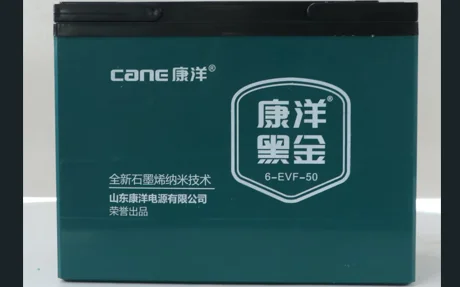
    As a pioneering new battery type in China, Cane Energy’s lead-lithium battery achieves multiple breakthroughs: charging time is reduced from the traditional 8 hours to 2 hours, and service life is extended by 50%. It combines the safety and stability of lead-acid batteries with the constant power and endurance of lithium batteries, maintaining over 70% discharge efficiency even in extreme environments as low as -30°C.

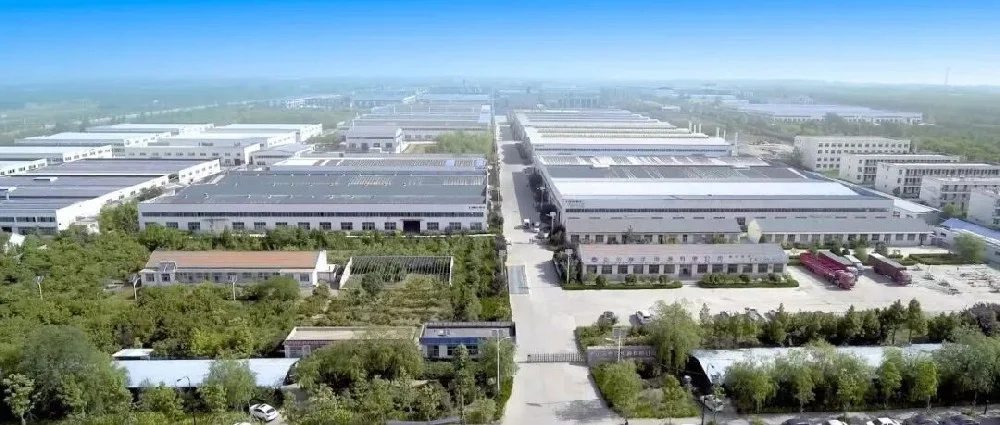
    Founded in 2005 and located in Gaozé Street, Wulian County, Cane Energy is a large modern enterprise integrating R&D, production, and sales of e-bike batteries, chargers, and controllers. Recently, our reporter visited its plate production workshop, where automated continuous casting and rolling production lines operate smoothly, with robotic arms precisely completing processes such as lead strip, mesh punching, continuous coating, and curing. This is both a manufacturing site and a frontier for technological innovation.

    “What we aim to do is not just produce batteries, but redefine them,” said Chief Engineer Xia Bode. The high-energy lead-lithium battery charges 60% faster than ordinary batteries, with a charge-discharge conversion rate of up to 96%, and it does not slow down even when the battery is at 50% capacity. “This is the result of our painstaking efforts,” he added.

    One late night in the autumn of 2021, the R&D center of Cane Energy was brightly lit as the technical team tackled the final challenge of dual-conductive lithium material fast-charging technology. Xia Bode and his colleagues had been working for 20 consecutive hours. “We tried 12 different polymer material formulations,” he recalled. “When the tester showed a charging efficiency of 100%, the entire lab erupted in excitement.”

    This core technology, leveraging a polymer honeycomb electron transport structure, achieves four major breakthroughs: safety and efficiency, ultra-low temperature resistance, ultra-long endurance, and constant power. “It preserves the safety of lead-acid batteries while achieving the energy conversion efficiency of lithium batteries, truly getting the best of both worlds,” said Xia Bode.

    To maintain its technological edge, Cane Energy continues to increase R&D investment: allocating over 6% of annual sales revenue to R&D, collaborating deeply with universities such as Jinan University, Wuhan University of Technology, the Institute of Physical Chemistry of the Chinese Academy of Sciences, and Tsinghua University; flexibly introducing three doctoral teams including Professor Zhu Chengfei from Nanjing Tech University, and cultivating over 30 high-level R&D personnel. The company encourages internal innovation, with the team completing over 100 “five small” innovation projects each year, generating more than 5 million yuan in economic benefits.

    To date, Cane Energy has obtained 32 patents, including for nano-colloidal batteries and low-temperature resistant batteries, and has overcome more than 50 new technologies such as “lightweight high-energy batteries,” achieving industrialization. It has developed a full range of products including lead-lithium batteries, small sealed batteries, and large sealed batteries, covering 12 major categories, 33 series, and over 400 specifications, widely used in electric vehicles, communication base stations, and energy storage stations.

    Alongside technological upgrades, production-side changes are equally impressive. In 2023, Cane Energy invested over 30 million yuan to launch a continuous casting and rolling production line for lead-acid batteries, which was completed and put into operation in July 2024. This advanced fully automated production line integrates lead strip automatic production lines, closed vacuum mixers, and high-temperature closed curing drying rooms, doubling plate capacity and production efficiency, saving 60% labor, and reducing energy consumption by 30%. “Traditional processes required melting lead at 500°C to 600°C, but now it’s only 327°C to 350°C, with lead utilization increasing from less than 90% to over 97%, and no lead fume or dust emissions,” said Deputy General Manager Feng Wei. “While increasing capacity by 50%, costs have dropped significantly, truly achieving automation, intelligence, and green production.”

    The product advantages from technological upgrades quickly gained market recognition. With a 19% increase in battery capacity and a 34% longer lighting duration, coupled with a service system of “one-year replacement plus 18-month warranty,” Cane Energy has become the preferred choice for industries such as food delivery and logistics. Today, its annual battery output exceeds 1.2 million units, with sales revenue reaching 220 million yuan.

    After nearly two decades of dedication, Cane Energy has reaped significant rewards: it has been selected as a national-level specialized and new “Little Giant” enterprise, recognized as a “Shandong Gazelle Enterprise” and “National High-Tech Enterprise,” and in 2024 was included in the provincial green manufacturing units. Moreover, it has taken the lead in drafting industry standards for lead-lithium batteries, promoting technological advancement and sustainable development in the industry.

    At the 2025 National First-Level Service Provider Conference, Chairman Feng Qiyong set a new goal: “We aim to become the ‘Pang Donglai’ of China’s battery industry!” This remark drew warm applause from over 400 service providers—Pang Donglai represents the ultimate in products and services, and Cane Energy is striving to achieve that.

    Tian Wenjun, a first-level section chief of Gaozé Street, said: “The growth of Cane Energy is a vivid example of the street’s efforts to ‘solve problems, find markets, and optimize the environment for enterprises.’ This year, we adhere to precise pairing, precise connection, and precise support, striving to be ‘shop assistants’ serving enterprises, so that high-quality companies can focus on innovation and development, and continue to grow stronger in Gaozé.”

    The government’s “sunshine and rain” nourishes the thriving growth of enterprises. In 2025, Cane Energy’s orders have increased by 30% year-on-year. From a small town to the whole country, from manufacturing to intelligent manufacturing, Cane Energy is setting new quality benchmarks and service standards for the battery industry with focus and innovation.

    This article is a reprint for corporate publicity only. The copyright belongs to the original media. If there are copyright issues, please contact us for timely handling.

    Source: Today’s Wulian WeChat Official Account, October 21, 2025, Reporter: Li Shan