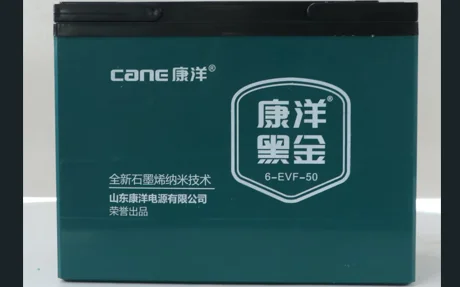
According to information from the China National Intellectual Property Administration, Shandong Cane Energy Power Technology Co., Ltd. has filed a patent titled “A Lightweight High-Energy Power Battery Electrolyte,” with application number CN202511122743.0 and a publication date of November 2025.
Patent Abstract
The present invention relates to the technical field of battery electrolytes, specifically to a lightweight high-energy power battery electrolyte. It includes perfluorocyclobutane-polytetrahydrofuran polyrotaxane gel, PbS@MoS2 core-shell quantum dot interface regulation, and a LiFSI/Mg(TFSI)2 dual-salt system, achieving high wettability. This increases the overall mass energy density of the battery to 398 Wh/kg, which is 53% higher than that of LFP batteries of the same volume.
The FDAC solvent has a freezing point as low as -68°C. Combined with the reduced desolvation barrier from PbS@MoS2 core-shell quantum dots, the 5C discharge capacity retention rate at -50°C reaches 83%. The gradient SEI induced by the dual-salt system exhibits high compressive stress characteristics. Together with the topological restriction of dendrite growth by PbS@MoS2 core-shell quantum dots, it successfully passes 50 MPa extrusion and nail penetration tests.
Background Technology
In typical application scenarios of lightweight high-energy battery electrolytes (such as drones and electric vehicles), existing formula designs are mostly based on the need for high energy density, lightweight, and safety improvements, but still have many limitations. Shortcomings of existing technologies include: conventional carbonate-based electrolytes have a density as high as 1.6-2.0 g/cm³, causing the battery system mass to account for over 35%, severely restricting lightweight requirements; at -40°C, electrolyte viscosity surges (>300 cP), Li⁺ transference number <0.3, and capacity drops sharply to below 15% of the initial value; under fast charging (≥5C), lithium deposition is uneven (surface roughness Ra>300 nm), easily causing short circuits and dendrite risks; additionally, the SEI layer formed by commercial electrolytes has a volume expansion rate of 85% during cycling, leading to a sharp increase in interface impedance and poor film formation stability.
Description Drawings
This article is reproduced for corporate publicity only. Copyright belongs to the original media. If copyright issues are involved, please contact us for timely handling.
Source: Intercontinental Battery Circle WeChat Official Account, February 5, 2026. Data source: China National Intellectual Property Administration.
Leave a Reply