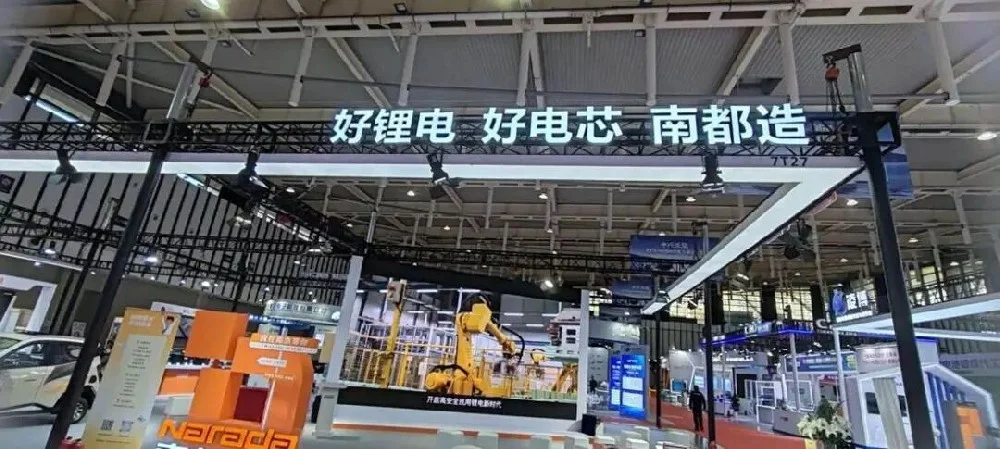
On October 23, 2025, the 42nd Jiangsu International New Energy Electric Vehicle and Parts Trade Fair opened grandly at the Nanjing International Expo Center. A battery technology feast was underway. The exhibition gathered major leading brands in the new energy battery field, including Narada Power, Cane Energy, Yadea Huayu Battery, Gotion High-tech, ZTE Pisen, Zhongna Power, EVE Energy, and Lingsheng Zhichuang.
As an important event for the electric vehicle industry chain in East China, the exhibition attracted over 750 exhibitors, with battery companies particularly eye-catching. Industry giants such as Narada Power, EVE Energy, and Yadea Huayu brought their latest technologies and products. As the core component of electric vehicles, battery technology breakthroughs and service upgrades became the focus of this exhibition. From Narada Power’s solid-state batteries to Yadea Huayu’s new service standards, battery technology competition is spreading from performance to the entire industry chain layout, from sodium battery applications to solid-state battery R&D, and from technological breakthroughs to service standard reshaping, fully demonstrating new industry trends.
Compliant Lithium Batteries: Dominating the Market with Technology Upgrades
Against the backdrop of the new national standard for electric two-wheelers and the increasing penetration of lithium batteries, compliant lithium batteries have become the mainstream trend at this exhibition.
Narada Power launched an ideal power choice for the new national standard era. Its 48V 24Ah lithium battery, with excellent performance and full compliance, has become an ideal power choice under the new standard. The product has passed the national mandatory 3C certification and fully meets the stringent requirements of the new standard.
To achieve high safety, long life, and high energy density, Narada Power integrates multiple cutting-edge technologies: in safety, it uses cell intrinsic safety, module-level short-circuit self-protection, and aerospace-grade thermal barrier technology; in extending life, it applies anode self-healing, multi-channel collaborative lithium replenishment, and low-impedance three-dimensional conductive network technology.
In addition, Narada Power’s 60V large-capacity lithium battery products also demonstrate strong strength in electric motorcycles and electric mopeds, providing safe and reliable power solutions for multi-scenario applications.
Narada Power showcased its self-developed 783Ah solid-state battery at the exhibition, based on three core technologies: “flexible two-phase oxidized solid electrolyte,” “multi-layer heterogeneous composite structure design,” and “in-situ electrolyte film formation.”
For niche markets, Narada Power launched multiple scenario-based battery solutions. For leisure tricycle users, Narada introduced a dedicated battery that “runs for seven days on a single charge,” directly addressing range anxiety.
EVE Energy: As an innovative lithium battery platform enterprise, EVE Energy focuses on creating extremely standardized battery packs, with multiple series models including 48V20Ah, 48V30Ah, 60V20Ah, 60V30Ah, 60V40Ah, and 72V30Ah. At this exhibition, EVE Energy showcased its comprehensive layout for the electric two-wheeler market. The company is committed to providing one-stop power battery solutions from cells to battery packs for various light power vehicles such as electric motorcycles, electric bicycles, electric tricycles, and low-speed four-wheelers, meeting diverse travel needs with safer, higher power, and longer life products.
EVE Energy highlighted its 46-series large cylindrical light battery pack. The battery uses automotive-grade cells and all-tab technology, featuring fast heat dissipation and fast charging, and is equipped with the latest “π system” to achieve ultra-high energy density. The battery energy density can reach 200Wh/g, with stable structure and no valve opening upon nail penetration, effectively improving safety and range. Meanwhile, its low internal resistance design supports 20-minute fast charging to 80%, and the cycle life can exceed 4000 cycles, providing a high-performance and economical solution for electric two-wheelers.
Electric tricycle battery layout: In the electric tricycle field, EVE Energy launched multiple products including 72V80Ah and 72V100Ah, and plans to further introduce new products such as 60V80Ah and 60V100Ah. These products use high-safety and high-reliability prismatic lithium iron phosphate cells, featuring large capacity, ultra-high rate, and strong power, supporting 1.5C output, meeting the demand for sustained power in tricycles. The 46-series large cylindrical light battery pack attracted attention, while also showcasing the full matrix of cylindrical batteries including 18650, 21700, 33140, and 40135.
Gotion High-tech: Brought its Gold Lithium battery to the Nanjing exhibition, offering extremely safe battery products for the electric vehicle industry. In addition to displaying Gold Lithium battery products, its Jinshi all-solid-state battery has built a 0.2GWh pilot line with 100% localization of core equipment and has entered vehicle testing; meanwhile, the G Yuan quasi-solid-state battery has an energy density of 300Wh/kg, passes 3mm steel needle puncture tests, and achieves a range of over 1,000 kilometers.
Xingheng Power: Presented its representative electric bicycle lithium battery product, the Ultra Lithium S30. By deeply optimizing the manganese-based material system, energy density is increased by 20%, and the room-temperature cycle life exceeds 3,000 cycles. This product achieves dual breakthroughs in materials and technology, comprehensively improving power, safety, and high-temperature resistance. Under compliance, the range exceeds 100 kilometers, providing consumers with a longer-range and safer lithium battery travel solution.
Xingheng Power showcased a new series of large-capacity cells at the exhibition, spanning three platforms: 48V, 60V, and 72V, covering capacities from 30Ah to 50Ah. The cells achieve multiple technological breakthroughs, combining the reliability of 2C stable discharge with the strong power of 5C instantaneous discharge.
Xingheng’s FAR series electric motorcycle lithium batteries feature excellent high-rate discharge characteristics, with smooth and powerful power output comparable to traditional fuel motorcycles. In the electric tricycle field, Xingheng lithium batteries, with the core commitment of “no capacity exaggeration, certified safety, and guaranteed after-sales service,” comprehensively reshape industry standards.
Lead-Acid Batteries: Service Standards Reshaping Industry Rules
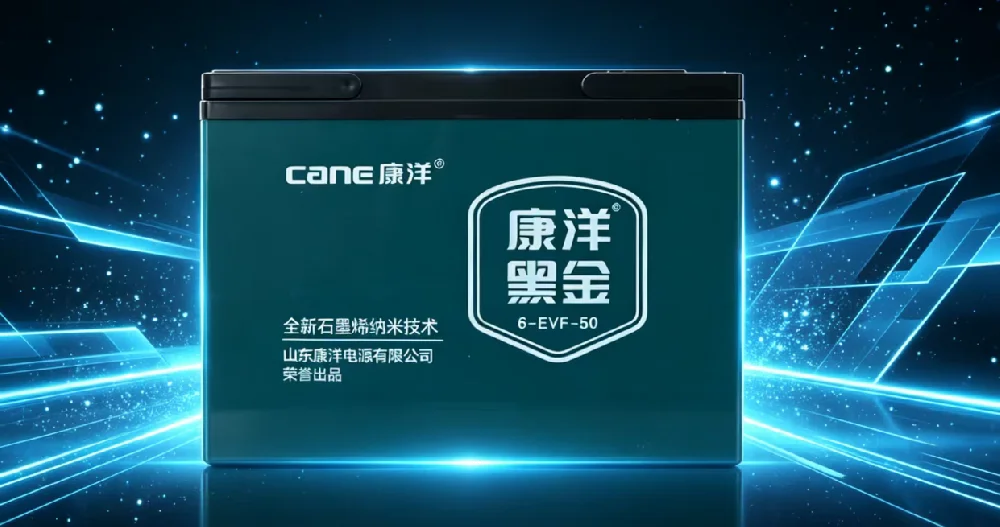
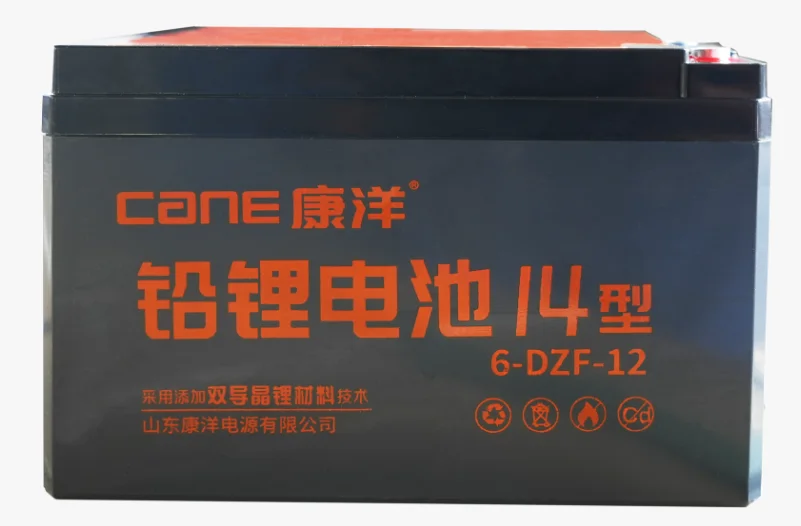
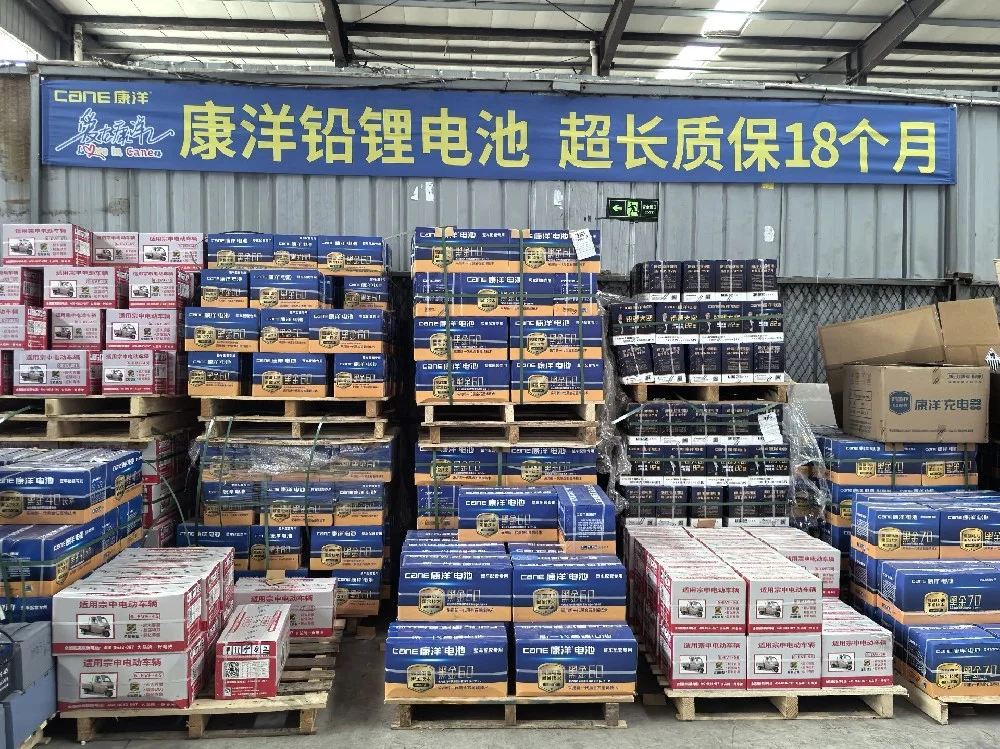
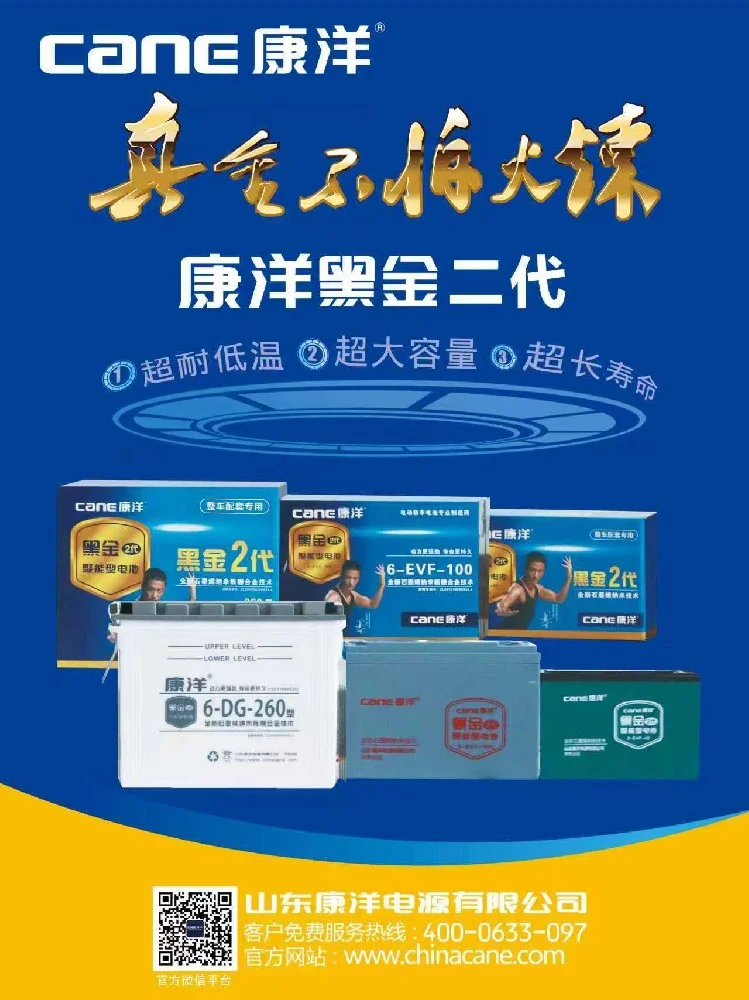
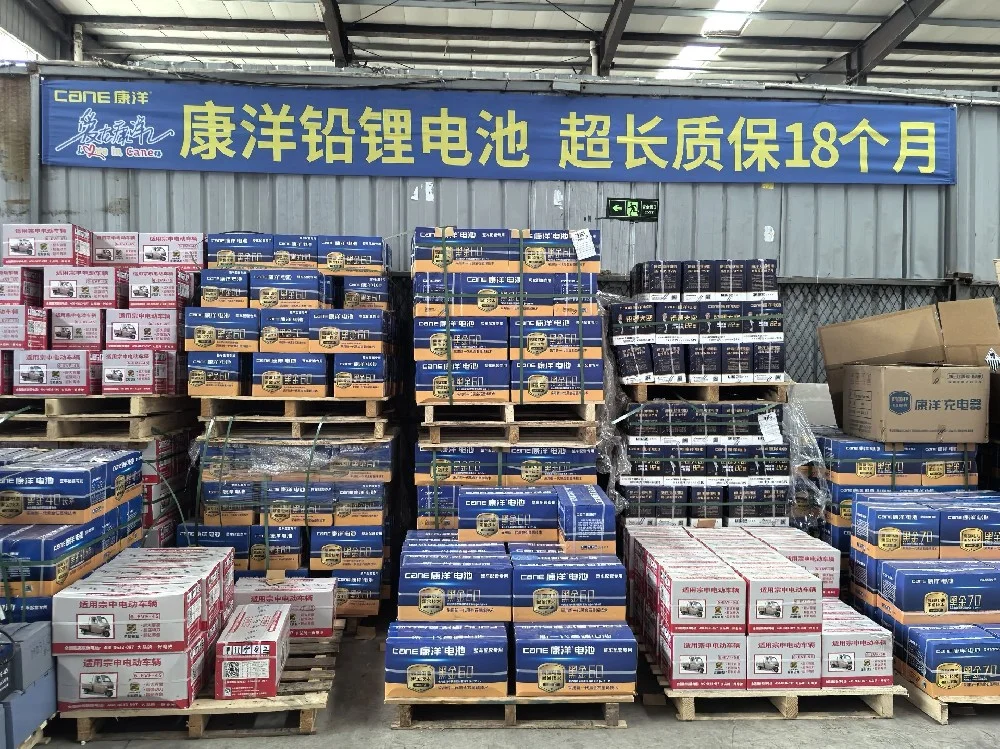
In the lead-acid battery field, companies are driving service model iteration from the “after-sales warranty” angle. Cane Energy brought two flagship products to the exhibition: Cane Energy lead-lithium batteries and Cane Energy lithium batteries. The Cane Energy lead-lithium battery incorporates dual-conductive lithium material, increasing capacity by 19% compared to ordinary lead-acid batteries, and offers an 18-month ultra-long warranty, further raising the industry ceiling in quality and service. Cane Energy’s high-end lithium batteries also perform excellently; Cane Energy only produces high-end products.
Sodium Batteries and Lithium Batteries: Multiple Technology Paths in Parallel
Sodium-ion batteries, as a potential lead-acid replacement, showed accelerated industrialization at this exhibition.
Yadea Huayu Battery: At this Nanjing exhibition, Yadea, through its subsidiary Huayu, released the “Huayu Battery Quality Service New Standard,” completely overturning traditional after-sales service models with “replace with new, not maintenance.” All products start with a 13-month replacement period. Combined with Huayu Battery’s IoT intelligent tester, it achieves “instant inspection and replacement.” The exhibition also launched the King Kong series batteries, which received much attention and welcome. The company showcased its sodium-ion battery ecosystem, including graphene batteries, sodium batteries, and the “Tianxia Wushan” four-electric sodium power platform.
Yadea Technology Group Senior Vice President Zhou Chao revealed that Yadea Huayu Battery has formed a dual-wheel drive pattern of “lead-acid + sodium battery.” In the sodium battery field, Yadea Huayu is building an intelligent travel ecosystem around “Extreme Sodium Batteries,” including Extreme Sodium fast charging (80% in 15 minutes), Extreme Sodium smart platform for real-time monitoring and maintenance, and “sensor-free battery swapping” service.
Zhongna Power: With the direction of “lithium for now, sodium for the future,” Zhongna, leveraging its accumulated core technology advantages and significant resources, officially entered the mainstream primary and secondary markets for two-wheeled electric vehicles, electric motorcycles, and light electric motorcycles. From October to the end of the year, the company will successively launch a new series of small power lithium battery products, covering three capacity segments (20/30/40Ah) and six models.
ZTE Pisen: Showcased electric motorcycle lithium batteries, shared battery swapping, and new sodium battery products. The lithium battery products feature “six super” characteristics: high-rate discharge from -20 to 60°C, cycle life of 1200+ cycles with SOH≥90%, strong adaptability and range, and full-cycle safety assurance. The new sodium battery products include automotive start-stop and light power batteries, with abundant sodium resources and unlimited potential, a wide temperature range from -30 to 80°C, support for 15C high-rate discharge, excellent low-temperature performance, and greater safety.
Yingong Technology: Launched the Yinsu 18650-900mAh sodium-ion cell, with 40C continuous/100C instantaneous ultra-high rate discharge capability, maintaining over 85% capacity even at -40°C. This product effectively solves the problems of poor low-temperature performance and short cycle life of traditional lead-acid batteries, ensuring easy starting of motorcycles in severe winter.
Heyuan Lithium Innovation: A technology innovation enterprise focusing on the R&D, production, and sales of advanced battery products such as solid-state lithium-ion batteries. Its self-developed high-energy-density, high-safety, long-life solid-state cells and solid-state battery products have broad application prospects in power, energy storage, and consumer electronics. At this exhibition, the company showcased high-energy-density solid-state lithium batteries for E-BIKEs, especially solid-state batteries, which meet the stringent requirements for long range, lightweight, and high safety with their high energy density, high safety, and flexible adaptability.
Overall Solution for Electric Motorcycle Ultra-Fast Charging: Full-Scene Energy Ecosystem Taking Shape
Battery management systems and battery intelligent detection technology are extending the application boundaries and management precision of batteries.
Lingsheng Zhichuang: As an innovative enterprise specializing in customized and intelligent battery management systems (BMS) and overall solutions, Lingsheng brought an overall solution for high-speed electric motorcycle ultra-fast charging. It uses the new national standard charging port for direct charging, dual CAN architecture, 24-28 cell platform, charging current up to 100A, discharge 150-300A, integrating BMS, OBC, and vehicle controller. The company also exhibited BMS solutions for drones and embodied intelligence, comprehensively deploying fast charging intelligence.
Youdan Technology: Showcased its end-cloud integrated intelligent management solution for light vehicle lithium batteries. At this exhibition, it focused on displaying the F733/F735/E750 series iBMS products for light vehicles and the complete battery asset management cloud platform solution, covering two-wheeler battery swapping and high-speed electric motorcycle scenarios. A series of themed lectures, ranging from industry trend insights to “end-cloud integrated” intelligent management solution recommendations, from platform intelligent operation and maintenance to battery swapping operation case analysis, effectively linked with product displays, clearly depicting a complete closed loop from product technology to commercial implementation.
Industry Chain Synergy: Building an Ecological Moat
Mainstream battery companies are building competitive barriers through full industry chain layout.
On the first day of the exhibition, Narada Power held a delivery ceremony for its G65L battery swap product, showcasing the company’s strong production capacity and quality control, while also demonstrating market recognition of the Narada brand and its products through large-scale deployment.
More strategically, Narada Power launched the “Golden Partner” program on site. Through systematic empowerment and in-depth support, the company transforms its brand, technology, and product advantages into tangible market development and service capabilities for channel partners.
Yadea Huayu Battery leverages its global 8 production bases, over 20 production lines, a daily capacity of nearly 500,000 units, and a R&D team of more than 300 people to build end-to-end traceability from raw materials to finished products.
A dealer standing in front of the Narada Power booth at the exhibition remarked: “Competition in the battery industry is no longer a simple price war; it has entered an all-round competition in technology, service, and ecosystem.”
As a person in charge of the new energy division of Tailg Group noted, companies are driving products to transition from “functional tools” to “tech-driven mobility products.”
As the core component of electric vehicles, the pace of battery innovation determines the development speed of the entire industry.
New National Standard Drives the Industry from “Scale” to “Quality”
With the mandatory implementation of the new national standard GB17761-2024 in September 2025, battery CCC certification, anti-tampering design, and labeling of safe service life have become essential for enterprises. This exhibition revealed three major transformation trends among battery companies:
– Deepening Technology: From material innovation (e.g., solid-state electrolytes) to structural design (e.g., composite layered cells) to enhance intrinsic safety.
– Service Transparency: Rebuilding user trust and reducing channel disputes through clear terms such as “full replacement.”
– Ecosystem Synergy: Meeting diverse global market demands through “sodium-ion + lithium-ion” and “battery + energy storage” multi-technology architectures.
Conclusion:
The “Core Competition” of Green Energy Begins
With the 42nd Nanjing Exhibition, competition in the battery industry is shifting from pure technology to a dual-drive of “technology + service.” The battery exhibition area at Nanjing clearly shows that industry competition has upgraded from “capacity parameters” to a comprehensive contest of “safety, service, and ecosystem.” Driven by both policy and market, companies must navigate compliance thresholds through technological breakthroughs and reshape service chains with a user-centric mindset to gain sustained influence in the new energy era. Zhou Chao, Senior Vice President of Yadea Technology Group, stated: “Only by solidifying after-sales support can we build trust between the brand and users, achieving a closed-loop ecosystem driven by both ‘product + service.’”
This article is a reprint for corporate publicity only. Copyright belongs to the original media. If copyright issues are involved, please contact us for timely handling.
Source: Jiangsu Bicycle and Electric Vehicle Association WeChat Official Account, October 25, 2025