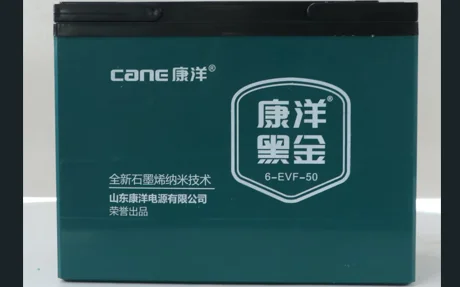
According to information from the China National Intellectual Property Administration, Shandong Cane Energy Power Technology Co., Ltd. has filed a patent application titled “A Battery Production Device,” with publication number CN 120690944 A and a publication date of September 2025.
Patent Abstract
The present invention relates to the technical field of battery production and discloses a battery production device, comprising a mounting plate. One side of the mounting plate is equipped with a telescopic cylinder that drives a tape-applying assembly and a tape-pressing assembly to move up and down. The tape-applying assembly moves up and down for tape application, and the tape-pressing assembly moves up and down for tape pressing. A speed-regulating assembly is arranged on the rear side between the tape-applying assembly and the tape-pressing assembly.
The battery production device achieves multi-station synchronous tape application. Multiple flexibly arranged dispensing heads can simultaneously apply buffer foam to the staggered crossbeams inside the battery metal casing. Compared with the traditional method of applying tape one by one, this significantly shortens operation time and greatly improves production efficiency. At the same time, the spacing between dispensing heads is adjustable, allowing accurate adaptation to different crossbeam spacing variations, effectively solving the technical problem that traditional fixed structures struggle to handle complex working conditions. This greatly enhances the application flexibility and production adaptability of the equipment in the tape application process.
Background Technology
Automotive batteries are key components that provide power to vehicles, mainly divided into two categories: starting batteries used in traditional fuel vehicles and power batteries used in new energy vehicles. The power batteries for new energy vehicles are more diverse, with common types including lithium-ion batteries (such as ternary lithium batteries and lithium iron phosphate batteries). They serve the core function of providing energy to the vehicle’s drive motor, with high energy density and range directly depending on their performance and capacity. At the same time, battery charging speed, cycle life, and safety are also key concerns in research, development, and application.
With the vigorous development of the new energy industry, the demand for batteries in automotive, energy storage, 3C, and other fields has grown explosively, driving continuous expansion of battery production scale. To meet the increasing market demand and improve battery production efficiency and quality, developing efficient and stable battery production devices has become a key industry focus. Meanwhile, the deepening application of new materials and processes in the battery field has placed higher demands on the adaptability and functionality of production devices, prompting continuous innovation and iteration of battery production devices to keep pace with the development trends of battery production technology.
The prior art, with publication number CN105742684B, provides a battery tape-applying machine, characterized by comprising: a frame, a tape feeding device, a tape conveying device, and a tape-applying device sequentially arranged on the frame. The frame is also provided with a battery placement device for fixing and placing batteries. The tape-applying device includes: a support block, a power drive unit, a tape cutting part, a tape pressing part, and a tape applying part sequentially movably arranged on the support block. The power drive unit has a first drive cylinder, a second drive cylinder, and a third drive cylinder. The first drive cylinder is drivingly connected to the tape cutting part, the second drive cylinder is drivingly connected to the tape pressing part, and the third drive cylinder is drivingly connected to the tape applying part. The winding tape-applying machine achieves automatic tape application for batteries through the coordinated work of various devices, improving production efficiency. The overall structure is simple, and it can perform “7”-shaped or “C”-shaped tape application operations according to different battery product models, thereby improving the versatility of the battery tape-applying machine.
The above prior art, although existing tape-applying equipment can adapt to different battery product models for tape application, still has significant technical bottlenecks. On one hand, existing equipment generally lacks multi-station tape application capability, making it difficult to meet the diverse tape application needs of different processes in battery production. Taking the cell tape application and battery packaging process as an example, the latter requires applying buffer foam to the surface of staggered crossbeams inside the metal casing to enhance the buffer performance between the battery module and the casing. In this scenario, a single tape-applying head device, when facing the crossbeam groove array, requires frequent movement and positioning, leading to low tape application efficiency. Moreover, the tape-applying head structure is fixed and cannot be flexibly adjusted according to the crossbeam spacing, further limiting production adaptability. On the other hand, existing devices often use multiple independent drive components to control tape application, tape pressing, tape cutting, and other actions, which not only increases equipment cost and maintenance complexity but also causes operational failures due to poor coordination among components. Additionally, the tape dispensing length relies on preset parameters, lacking a real-time flexible adjustment mechanism, making it difficult to meet precise tape application requirements under different working conditions.
Therefore, there is a need for a battery production device that addresses the issues mentioned in the background technology: lack of multi-station tape application function, low efficiency and non-adjustability of single tape-applying head, poor coordination of multiple drive components leading to failures, and inability to flexibly control tape dispensing length.
Description of Drawings
Figure 1 is a schematic structural diagram of the present invention;
Figure 2 is a schematic diagram of the connection structure of the tape-applying assembly of the present invention;
Figure 3 is a schematic diagram of the partial connection structure of the telescopic cylinder and the tape-pressing assembly of the present invention;
This article is reproduced for corporate publicity purposes only. Copyright belongs to the original media. If copyright issues are involved, please contact us for timely handling.
Source: Intercontinental Battery Circle WeChat Official Account, March 19, 2026
Leave a Reply