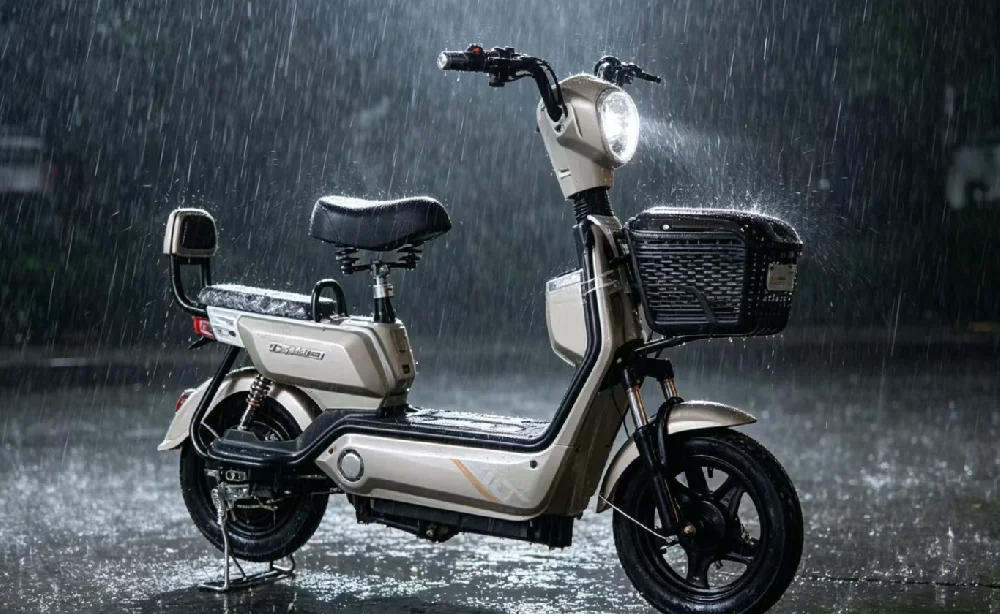
As spring arrives and temperatures rise, rainy days become more frequent, especially around the Qingming Festival. Riding an electric bike in the rain requires attention to safety, and proper post-rain maintenance can effectively extend the life of both the vehicle and its battery. This article provides practical tips for using and protecting your e-bike during the rainy season, ensuring a safer spring commute.
I. Key Precautions for Riding in the Rain
1. Slow down and avoid sudden braking or sharp turns.
Wet roads reduce tire grip, so ride at a slower speed. Avoid rapid acceleration, hard braking, or sharp turns to prevent skidding or loss of control.
2. Avoid deep puddles.
If you encounter standing water, it’s best to detour. Deep water can soak the vehicle’s wiring, motor, and other components, affecting performance and increasing the risk of malfunctions.
3. Keep your vision clear and protect yourself.
Wear appropriate rain gear to ensure a clear view ahead and to the sides. Stay alert to road conditions, avoiding potholes and muddy areas for safer riding.
4. Keep distance from pedestrians and other vehicles.
In rainy weather, pedestrians and vehicles move more slowly. Maintain a safe distance and ride steadily without rushing.
II. Timely Post-Rain Maintenance for a Longer-Lasting E-Bike
1. Wipe down the bike to keep components dry.
After riding, use a clean cloth to wipe the frame, wheels, brakes, and other parts. This reduces prolonged moisture exposure, lowering the risk of rust and aging.
2. Check wiring and connectors for dryness.
Inspect battery terminals, charging ports, and wire connections to ensure no water ingress or dampness. If moisture is found, let them air dry in a ventilated area before use.
3. Do not charge immediately after rain.
Batteries and charging ports may retain moisture after rain or exposure to damp conditions. Allow the vehicle to air dry in a ventilated space before charging to enhance safety.
4. Check brakes and tires.
Rain can affect brake performance. After riding, gently apply the brakes a few times to dry them. Also, inspect tire tread and pressure to ensure stable riding.
5. Park in a dry, ventilated area.
Avoid leaving your e-bike exposed to rain or in damp environments for long periods. Store it in a dry, well-ventilated location to protect both the vehicle and battery.
III. Extra Care for Batteries in the Rainy Spring
The battery is a critical component of an e-bike, and proper care is essential in humid weather:
- Avoid prolonged exposure to rain or direct water spray on the battery.
- Keep the battery casing clean and ensure connections are tight and secure.
- Use a compatible, undamaged charger; never use broken or damp accessories.
- If you notice overheating, unusual odors, or other abnormalities, stop using the battery immediately and have it inspected.
Batteries with stable quality typically offer reliable structural protection and consistent performance, providing dependable support for daily commuting during the variable spring weather.
Cane Energy: Stable Quality for Every Spring Journey
Cane Energy is dedicated to battery R&D and manufacturing, always prioritizing product stability and safety. From raw material selection and production process control to rigorous factory testing, we adhere to strict standards to deliver batteries with stable range and reliable performance.
Spring brings more rain, and safety comes first. Cane Energy reminds all users: ride cautiously in the rain, perform timely post-rain maintenance, and use and protect your e-bike properly. Let safety accompany every ride.
Leave a Reply