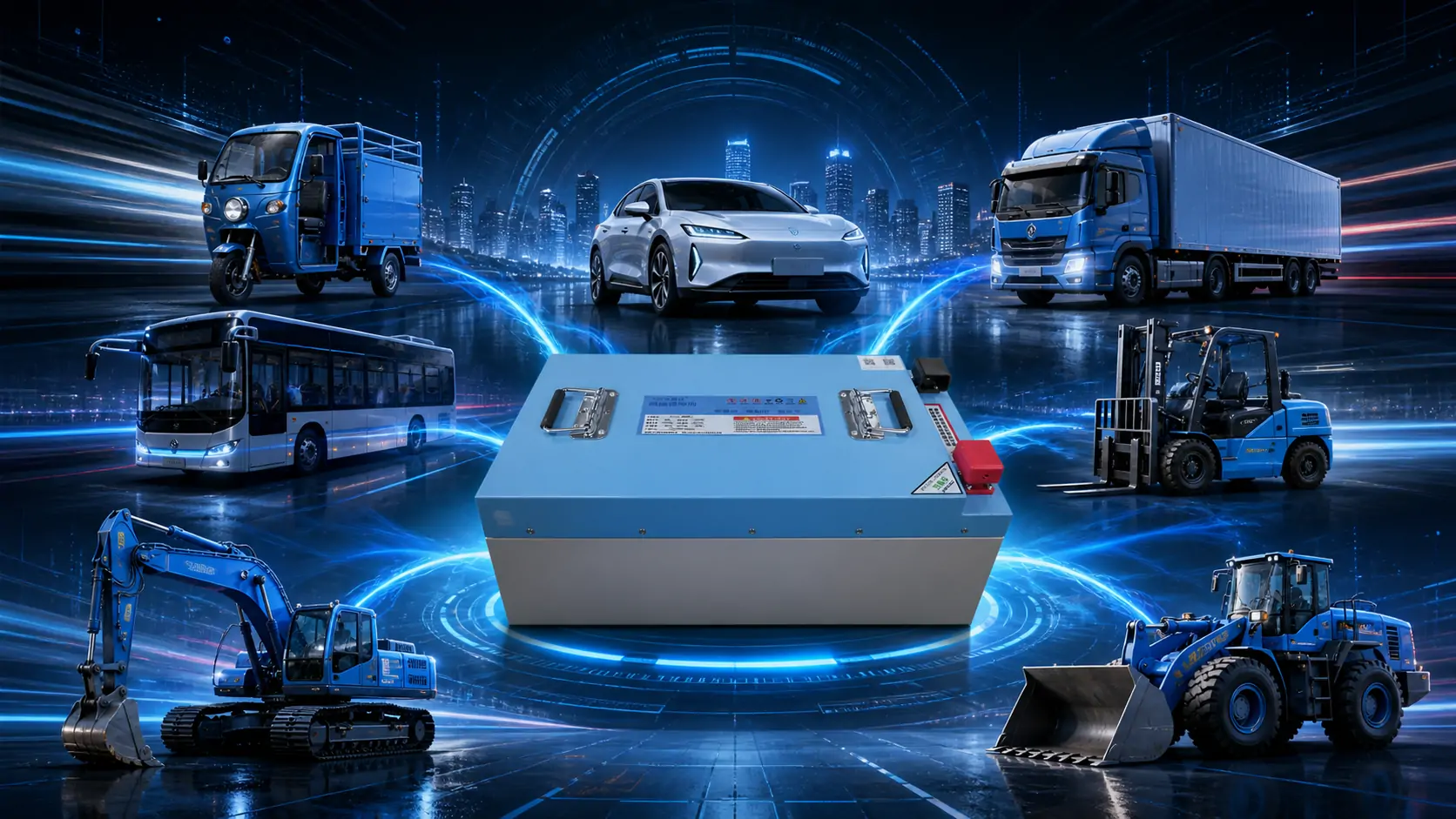
LiFePO4 battery safety is a critical consideration for electric mobility applications such as e-bikes, scooters, golf carts, and light electric vehicles. Unlike conventional lithium-ion chemistries, lithium iron phosphate offers inherent thermal and chemical stability, making it a preferred choice for traction battery systems where reliability and user protection are paramount.
Why LiFePO4 Chemistry Is Safer
The olivine crystal structure of lithium iron phosphate resists oxygen release at elevated temperatures. This characteristic significantly reduces the risk of thermal runaway, a chain reaction that can lead to fire in other lithium-based batteries. LiFePO4 cells can withstand overcharge, short circuit, and physical abuse with far less energy release than cobalt-based alternatives.
Battery Protection Systems in LiFePO4 Packs
Every quality LiFePO4 traction battery integrates a Battery Management System (BMS) that monitors and controls key parameters:
- Overvoltage and undervoltage protection – Prevents cell damage from charging beyond 3.65V or discharging below 2.5V per cell.
- Overcurrent and short-circuit protection – Disconnects the load if current exceeds safe limits, protecting wiring and connectors.
- Temperature monitoring – Halts charge or discharge if internal temperature exceeds 60°C or falls below -20°C.
- Cell balancing – Ensures all series-connected cells maintain equal voltage, extending cycle life and preventing reverse charging.
Practical Safety Checks for Buyers
When sourcing LiFePO4 batteries for electric mobility projects, verify the following specifications:
- Cell certification – Confirm cells meet UN38.3 for transport safety and IEC 62133 for household and light industrial use.
- BMS configuration – Ensure the BMS is matched to the battery’s nominal voltage and continuous discharge current. For example, a 48V 20Ah pack typically requires a BMS rated for 30A continuous discharge.
- Connector quality – Look for Anderson, XT60, or proprietary connectors with proper gauge wiring to avoid resistive heating.
- IP rating – For outdoor or wet environments, choose packs with IP65 or higher ingress protection.
Charger Matching and Usage Guidelines
Using the correct charger is essential for LiFePO4 battery safety. A dedicated LiFePO4 charger delivers a constant current/constant voltage (CC/CV) profile with an absorption voltage of approximately 3.6V per cell. Never use a charger designed for lead-acid or other lithium chemistries, as voltage mismatches can trigger overvoltage protection or reduce cycle life.
Factors Affecting LiFePO4 Battery Price
Pricing for LiFePO4 traction batteries depends on several variables:
- Capacity and voltage – Higher amp-hour ratings and 48V or 72V configurations increase cost proportionally.
- BMS complexity – Smart BMS with Bluetooth monitoring or CAN bus communication adds to the bill of materials.
- Cell grade – Grade A cells from established manufacturers command a premium over Grade B or recycled cells.
- Customization – Custom form factors, connector types, or enclosure materials affect lead time and price.
For accurate pricing, request a quotation with your specific voltage, capacity, and application details.
Frequently Asked Questions
Is LiFePO4 battery safer than lithium-ion?
Yes. LiFePO4 chemistry is inherently more stable than lithium cobalt oxide or NMC chemistries. It has a higher thermal runaway threshold (around 270°C compared to 150°C for NMC) and does not produce oxygen during decomposition, which reduces fire risk.
What is the role of BMS in LiFePO4 battery safety?
The BMS protects the battery from overcharge, overdischarge, overcurrent, short circuits, and extreme temperatures. It also balances cell voltages to maintain pack health. Without a properly configured BMS, even a safe chemistry like LiFePO4 can be damaged or become unsafe.
Can I use a lead-acid charger for LiFePO4 batteries?
No. Lead-acid chargers typically have higher absorption voltages and may not include a proper CC/CV profile for LiFePO4. Using an incompatible charger can trigger overvoltage protection, reduce battery life, or cause the BMS to disconnect the pack.
How do I verify the safety of a LiFePO4 battery before purchasing?
Request documentation for cell certifications (UN38.3, IEC 62133), BMS specifications, and IP rating. Ask for test reports on overcharge, short circuit, and thermal abuse. Reputable suppliers will provide these upon request.
Leave a Reply