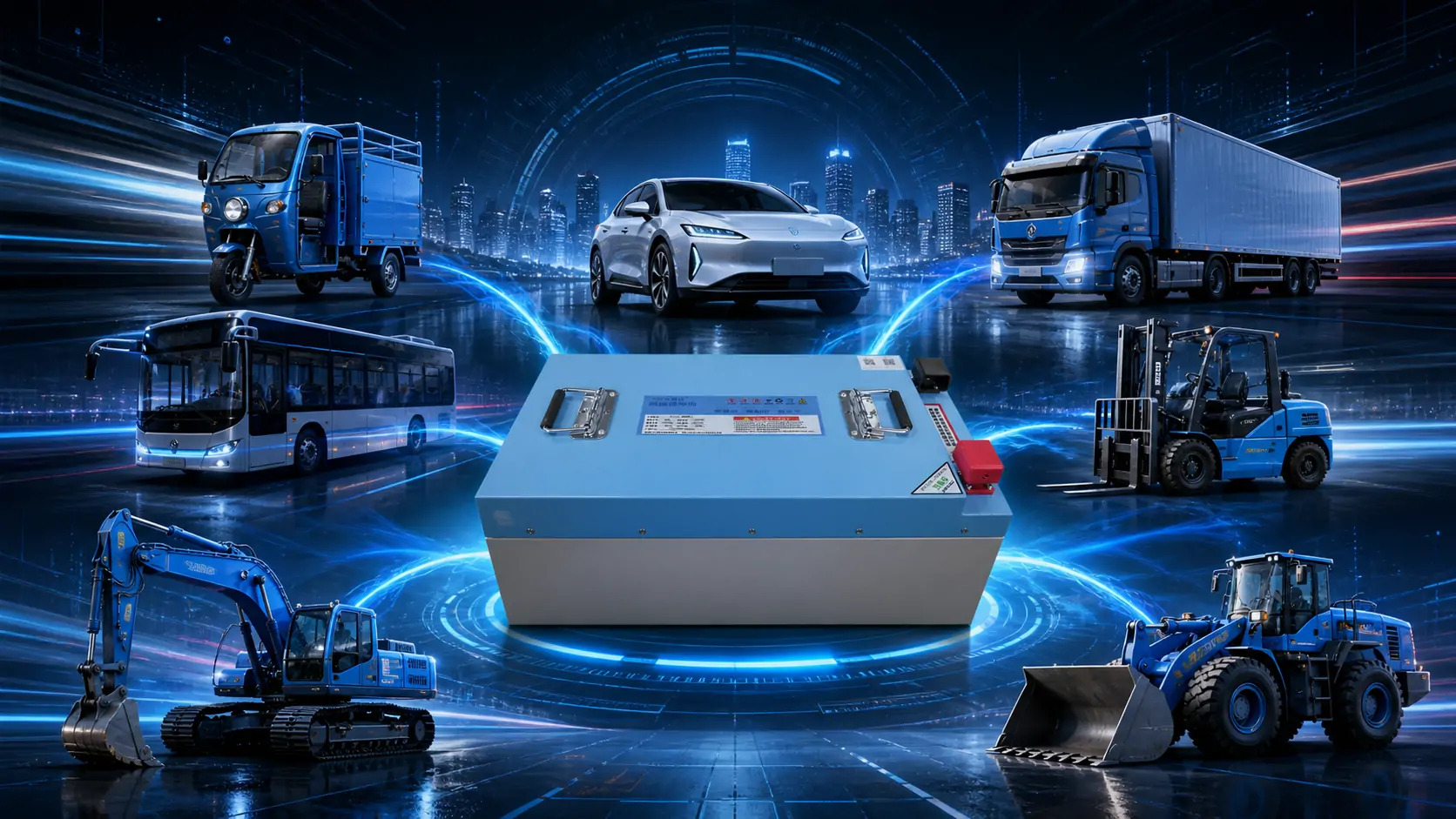
LFP battery meaning refers to lithium iron phosphate (LiFePO4) chemistry, a type of lithium-ion battery known for its thermal stability, long cycle life, and safety. Unlike other lithium chemistries, LFP uses iron and phosphate as cathode materials, which provide a stable structure that resists thermal runaway. This article explains the LFP battery meaning in technical detail, covering specifications, safety, charger matching, and procurement considerations for OEM and wholesale buyers.
What Does LFP Battery Mean?
LFP stands for lithium iron phosphate, a rechargeable battery chemistry where the cathode is made from lithium iron phosphate (LiFePO4). The anode is typically graphite. During discharge, lithium ions move from the anode to the cathode through an electrolyte, generating electrical current. The iron-phosphate bond is stronger than the cobalt-oxide bond in other lithium-ion batteries, making LFP cells more resistant to overheating and combustion.
Key Specifications of LiFePO4 Batteries
When evaluating LFP batteries for projects, consider these typical parameters:
- Nominal voltage: 3.2V per cell (compared to 3.6V–3.7V for NMC or LCO).
- Operating voltage range: 2.5V to 3.65V per cell.
- Energy density: 90–160 Wh/kg, lower than NMC but acceptable for stationary storage and many mobility applications.
- Cycle life: 2,000–5,000 cycles at 80% depth of discharge, depending on quality and usage.
- Operating temperature: -20°C to 60°C, with reduced performance at extremes.
- Self-discharge rate: Approximately 3–5% per month at 25°C.
These specifications make LFP suitable for solar energy storage, electric vehicles, marine, RV, and backup power systems where safety and longevity are priorities.
Safety Advantages of LFP Chemistry
The primary benefit of LFP batteries is their thermal and chemical stability. The phosphate cathode does not release oxygen easily, reducing the risk of thermal runaway even under overcharge, short circuit, or physical damage. LFP cells pass nail penetration and overcharge tests more reliably than NMC or LCO cells. This makes them a preferred choice for applications where fire safety is critical, such as residential energy storage and public transportation.
Charger Matching for LFP Batteries
Using the correct charger is essential for LFP battery performance and lifespan. LFP batteries require a constant current/constant voltage (CC/CV) charging profile with an absorption voltage of 3.45–3.65V per cell and a float voltage of 3.35–3.45V per cell. Do not use chargers designed for lead-acid or other lithium chemistries without verifying the voltage settings. Many BMS (battery management system) units include overvoltage protection, but proper charger matching prevents accelerated aging.
Procurement Considerations for OEM and Wholesale Buyers
When sourcing LFP batteries for commercial projects, evaluate these factors:
- Cell grade: Grade A cells from reputable manufacturers have tighter capacity and voltage tolerances.
- BMS quality: A robust BMS with balancing, overcurrent, and temperature protection extends pack life.
- Certification: Look for UN38.3, IEC 62133, or UL 1973 certifications depending on target markets.
- Supplier transparency: Request datasheets, cycle life test reports, and safety documentation.
- Price factors: LFP prices are influenced by raw material costs (lithium carbonate, iron phosphate), cell format (cylindrical, prismatic, pouch), order volume, and shipping logistics. Obtain quotes from multiple suppliers and compare specifications.
Frequently Asked Questions
What is the difference between LFP and NMC batteries?
LFP (lithium iron phosphate) batteries have lower energy density but higher thermal stability and longer cycle life compared to NMC (nickel manganese cobalt) batteries. LFP is safer and more cost-effective for stationary storage, while NMC offers higher energy density for compact applications like electric vehicles.
Can I replace a lead-acid battery with an LFP battery?
Yes, but you must ensure the charger and system voltage are compatible. LFP batteries have a different charging profile and nominal voltage (12.8V for a 4S pack vs. 12.6V for lead-acid). Use an LFP-specific charger or a programmable charger set to the correct absorption and float voltages.
How long does an LFP battery last?
LFP batteries typically last 2,000 to 5,000 cycles at 80% depth of discharge, which translates to 5–15 years depending on usage, temperature, and charging practices. Proper BMS management and avoiding deep discharges extend service life.
Are LFP batteries environmentally friendly?
LFP batteries contain no cobalt or other heavy metals, making them less toxic than NMC or LCO chemistries. They are also more recyclable, and the iron and phosphate materials have lower environmental impact during extraction. However, proper recycling infrastructure is still developing.
Leave a Reply